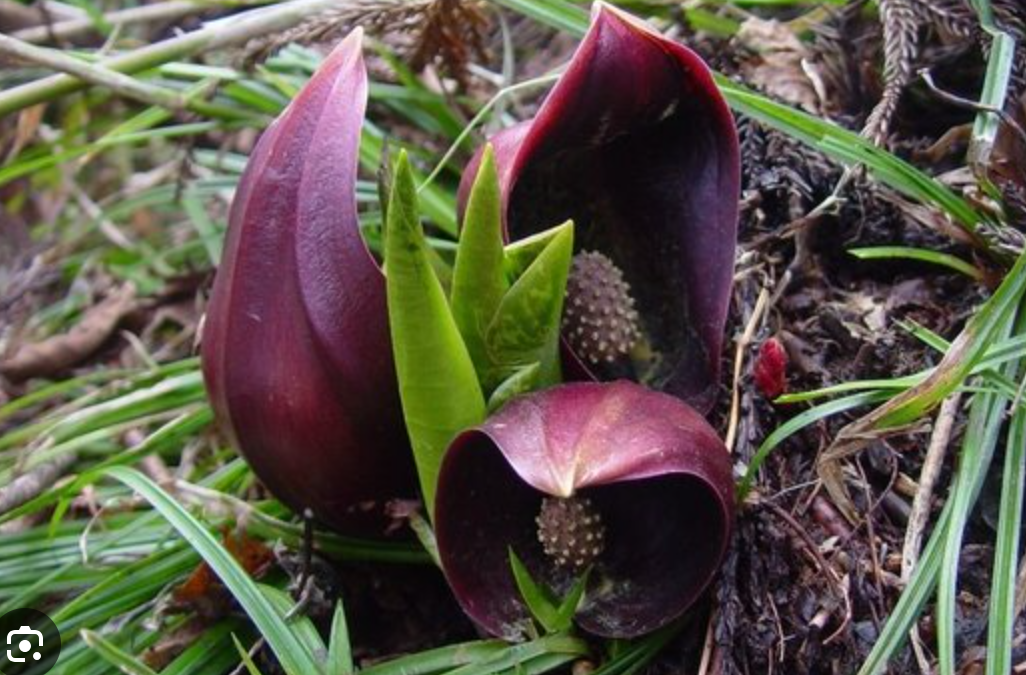
Symplocarpus foetidus, better known as skunk cabbage, is the kind of plant that shows up early to the spring party and immediately makes an impression—a stinky impression, that is. Found in wetlands and mucky forests across eastern North America, it produces a pungent odor attracts flies and carrion-loving beetles that help pollinate its unusual, hooded flowers.
One of the plant’s most surprising talents is its ability to generate its own heat. One of the few thermogenic plants, skunk cabbage is capable of melting snow around it so its maroon, mottled spathe—a leaf, of sorts, that protects the plant’s flowers—can push through frozen ground in late winter. Inside that heated chamber sits the spadix, a tight cluster of tiny flowers that rely on the warmth not only to survive but also to better waft their funky scent to passing insects.
Once the flower show is over, skunk cabbage switches into full leafy grandeur. Its leaves grow impressively large—up to 22 inches long—but tend to turn into mush by season’s end, thanks to their high water content. Beneath the surface, meanwhile, the plant uses its roots to slowly drag itself deeper into the soil each year, making it nearly impossible to dig up once established. Keep an eye out for this quirky, resilient native when exploring wetland areas of our preserves this spring.
Story appears in Natural Lands newsletter. For more check out the blog by Anthony Fredericks here.








 Underground Railroad